Chapters · 5 / 9
I didn’t sleep after seeing Beatrice’s signature on the failed inspection notice. I kept picturing my sons sitting behind the blue door while adults downstairs discussed what the property might be worth. Whenever I felt anger rising toward something reckless, I returned to the nursery and watched Theo and Ben breathe. The room had a faint smell of soap and warm cotton. It reminded me why I needed facts, not revenge.
By morning Grace had obtained the engineer’s correspondence. The firm had sent three requests to finish its evaluation, all addressed to Gull Point’s estate office. The replies stated that the owner considered the project substantially complete and no further visits were necessary. My name appeared in the message footer, though the sending address belonged to Beatrice’s office.
"We’re preserving the originals," Grace said. "The documents show what was represented. We’re not going to assume every person who repeated that representation understood it was false."
"Beatrice signed the acknowledgment."
"Then she needs to explain it. But first we need to know where the money went."
Priya’s bank review showed payments to Breakwater Coastal Works, the company supposedly hired to complete the structural repairs. The business had an address in an industrial park two counties away. There were deposits into its account, transfers out, and little evidence of the materials listed on its invoices. A portion of the repair reserve had been moved into ordinary estate operating expenses during a season when events at Gull Point lost money.
I stared at the amounts. The losses were real. The repairs appeared largely unfinished. Someone had used money reserved for the latter to cover the former, then tried to make the accounts look balanced.
"Was any of it used personally?" I asked.
"Too early to say," Priya replied. "We can establish the transfers. We haven’t established who ultimately benefited from all of them."
I appreciated her precision. There was enough wrong in front of us without inventing the rest.
I called our event coordinator, Nina Shaw, and asked her to meet me away from the main office. Nina had worked at Gull Point before Rose became ill. She knew Beatrice’s habits, which rooms she showed to prospective clients, and when she asked the kitchen to prepare food for a group not listed on the official calendar.
We sat at a small cafe near the marina. Nina was nervous enough to keep stirring a cup of coffee she’d stopped drinking.
"Last winter she told us the house was facing a financial emergency," Nina said. "She said your lawyers wanted us to be discreet about the sale. I thought you knew. She showed me an email with your name on it."
"Did she ever ask you to conceal damage?"
Nina looked down. "She asked me to keep guests away from the east terrace. I was told the fencing was temporary. I didn’t know she’d been putting your children in the blue room. If I had, I would have said something."
She gave me a copy of the event schedule she kept on her own laptop. It showed a series of private presentations for North Harbor Leisure, followed by one marked advance consulting fee. The amount was large enough to explain why Beatrice had been pushing the sale so urgently.
Grace reviewed the document that afternoon. The payments might represent legitimate pre-development expenses or something else, depending on what Beatrice had promised. There was no evidence a property sale had closed. But the developer had been given access, and someone had represented that I approved negotiations when I hadn’t.
I thought of how efficiently Beatrice had always arranged things. It had taken my failure to pay attention to make that efficiency dangerous.
When I returned home, Clara had moved the boys’ play things into the old breakfast room, away from the closed wing. She was kneeling beside Ben, who had become frightened when someone dropped a metal tray in the kitchen. She didn’t say, "It’s only a noise." She identified the sound and waited while he decided whether he wanted to look at the tray. When he finally approached it, Theo came along as though the whole business had been his idea.
"Does it get better?" I asked her after they wandered off.
"If we make the house predictable. If we stop pretending frightening things are harmless because they’re inconvenient to us."
The answer had an uncomfortable reach beyond childcare.
Dr. Santos visited that evening. She had known the boys since their first winter and was careful not to draw sweeping conclusions from a few conversations. She asked about their sleep, separation, language, and how they responded to familiar adults. Then she watched them play and spoke with Clara and me separately. She recommended consistent routines, access to a child-development specialist if their fear continued, and an immediate end to any isolation used as punishment.
"They don’t need adults arguing about what the word Mama means," she said. "They need reassurance that someone comes when they call."
I asked how to rebuild their trust in me. She didn’t offer a secret technique. She told me to keep showing up for meals, wake-ups, and difficult moments, not only the pleasant ones. I wrote the advice down, though I could have put it more simply: stop leaving.
That night Grace brought Grant Haskell to Gull Point for a meeting, accompanied by his counsel. I had agreed only after she reviewed the correspondence and made clear that the conversation did not approve any sale. Grant looked more irritated than sinister. His team had spent money on surveys and drawings because Beatrice had assured them the owner wanted the property marketed.
"We were told you needed a quiet transaction before the next hurricane season," he said.
"I have never authorized a sale."
Grant looked toward Grace, then opened a packet of printed communications. One included a handwritten note from Beatrice: Julian is focused on the boys and his other businesses. My office will handle the property. Another promised exclusive access to the shoreline once redevelopment began.
"You can’t promise that," I told him. "There are longstanding access arrangements with the town."
"We were told they were informal."
"Some are. We need to verify the recorded ones as well."
Grant’s lawyer asked for time to review the title record. We agreed to exchange documents through counsel, with no further site visits until the safety concerns were resolved. It was not a dramatic confrontation. It was a negotiation being stopped before it became something harder to undo.
As they left, I saw Beatrice watching from the upstairs landing. She did not come down.
The next morning I went to the boathouse to look for the old town-access records Rose used to keep there. The building had been closed since her illness. Hector brought a key and warned me to stay away from the water-facing wall until Tessa could inspect it. Inside were broken oars, old event lanterns, and shelves of boxes labeled in Rose’s handwriting.
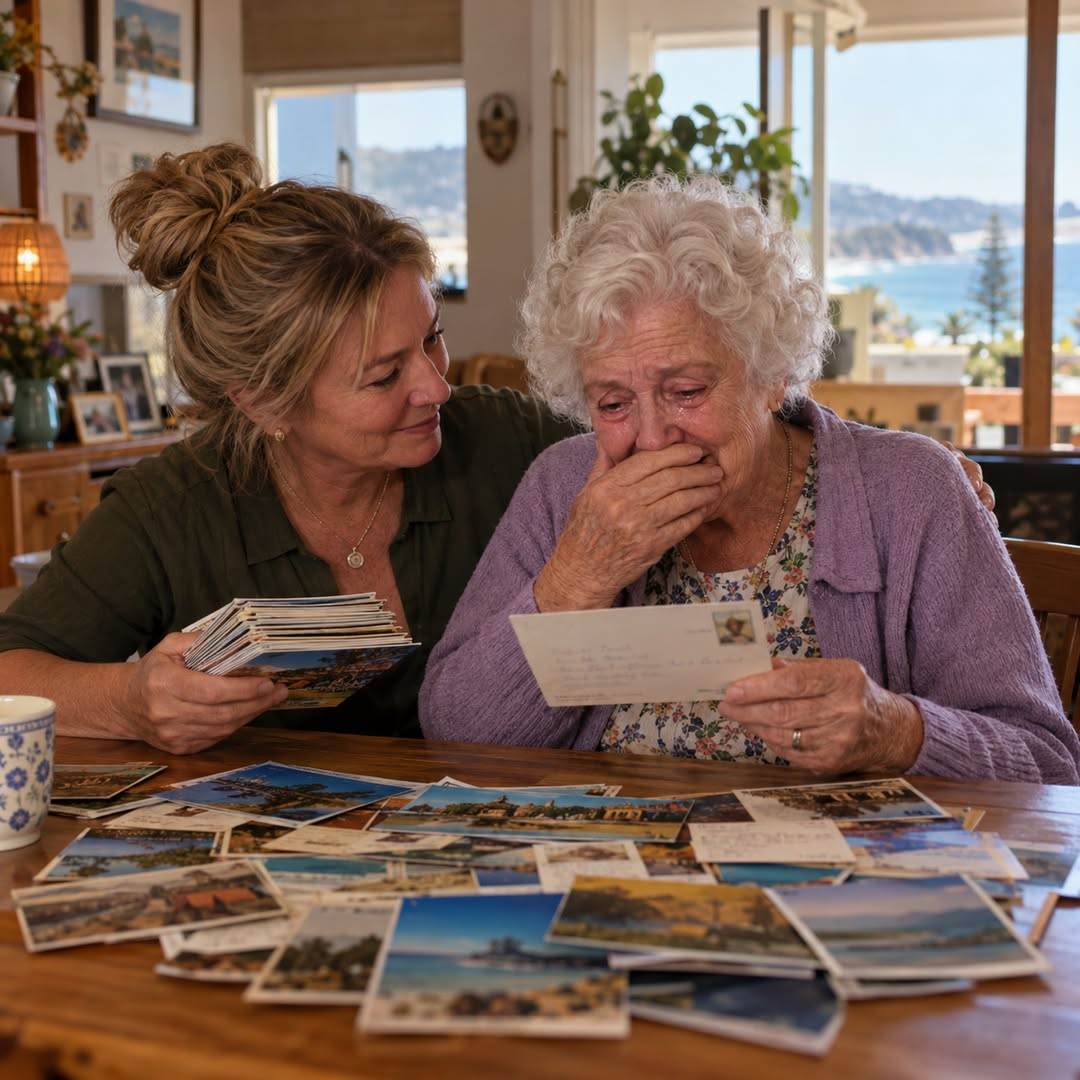
One held photographs from a beach cleanup. Rose stood at the center with a group of children in life jackets, her hair blowing across her face. Another held thank-you notes from families whose children had learned to swim through a program she helped fund. I sat on an upturned crate with the pictures spread across my knees. I’d been searching for documents and found a life my wife had lived beyond the hospital rooms where I remembered her most clearly.
In a drawer beneath the photographs was a manila envelope addressed to The Town of Port Ellis — Harbor Access Committee. Inside were copies of meeting minutes, old shoreline maps, and a draft agreement preserving passage along the upper path. Rose had made notes in the margin, circling a narrow strip of land above the beach.
Hector examined the map. "That’s the path Beatrice put the private-property sign on."
"Rose was working on a permanent access agreement?"
"She wanted the children from town to have somewhere safe to reach the water. The lawyers were still reviewing it when she got sick."
I called Grace, and she asked me not to assume the draft had been executed. We would check the records. Still, the document explained why Rose had cared so fiercely about the shore, and why the redevelopment drawings had troubled me before I understood them.
That afternoon Priya called with a further discovery. A transfer from the repair reserve had gone not to construction but to a holding account controlled by an entity called Breakwater House Management. Its manager was Beatrice Mercer.
"Julian," Priya said, "the records suggest your aunt wasn’t just hiding an unfinished repair. She was borrowing from the house to keep a separate company solvent."
Before I could answer, Hector came running from the east lawn, his phone in his hand.
"You need to see the tide marker," he said. "The new reading is higher than it was this morning, and the weather service has issued a coastal storm watch."
Outside, the wind had begun moving off the water. The sea was turning the color of slate.
And for the first time I understood that the financial investigation was not the most urgent thing happening at Gull Point.